Engraved Glass vs. Luminescent Ink: A Comparison of Two Display Technologies for Branded Refrigerated Cabinets
Updated: Sep 22
Introduction
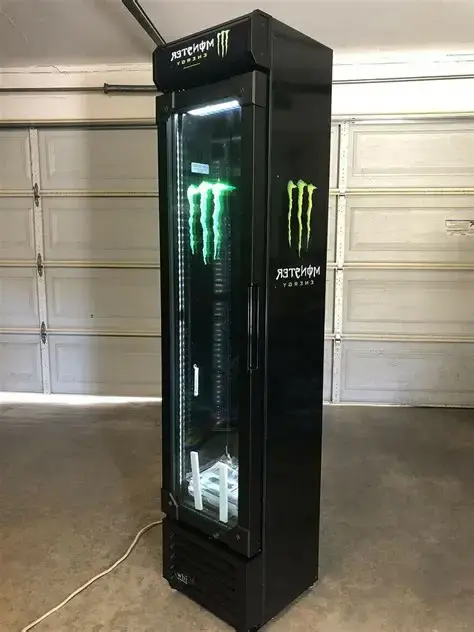
In premium beverage and food brand merchandising, a luminous logo on a glass display door often constitutes the first—and sometimes the only—visual element that captures consumer attention. As retail shelf space becomes increasingly contested, the quality of point-of-sale visual presentation has evolved from a “nice-to-have” to a competitive necessity.

Glass door assemblies typically account for 7–8% of the total cost of freezer cabinets and 18–25% of beverage coolers—a non-negligible portion of any procurement budget. The global glass-door display fridge market was valued at approximately US$5.2 billion in 2023 and is projected to reach US$8.4 billion by 2032, representing a compound annual growth rate (CAGR) of 5.3%. Within this context, understanding the alternative technologies for illuminated brand display on glass doors is essential for making informed equipment selections.

Two mainstream technologies are currently available for achieving back-lit or edge-lit brand logos on glass doors:
Engraved glass with built-in LED strips
Luminescent ink with externally mounted LED strips
The following sections describe each technology from the perspectives of construction, manufacturing process, cost, benefits, and limitations, followed by an objective side-by-side comparison and guidance on appropriate use cases.
1. Engraved Glass with Built-in LED Strips
Engraved glass is produced by physically removing material from the glass surface—via laser engraving, acid etching, or sandblasting—to create the desired logo or pattern. Edge-mounted built-in LED strips illuminate the engraved areas, causing them to glow.

Construction and Working Principle
This solution typically employs a triple-pane (three-layer) insulated glass unit: an outer pane, a middle ultra-clear (low-iron) pane on which the engraving is made, and an inner pane. The ultra clear glass ensures high light transmittance and colour purity of the illuminated pattern. The three panes are assembled into a sealed insulating glass unit, and the LED strips are encapsulated inside the unit during the lamination process, positioned along the edges. Light couples into the glass and is scattered by the engraved micro-roughness, producing the visible logo.

Manufacturing Requirements
Because any dust, fingerprints, or scratches on the engraved surface become highly conspicuous under edge lighting, production must be carried out in cleanroom environments, with operators wearing anti-static attire. After fabrication, each unit undergoes rigorous light-box inspection—even minor contaminants or defects can lead to rejection.
Cost and Lead-time Considerations
Etched or sandblasted glass commands a significant premium over plain tempered glass. Pricing scales with pattern complexity, and custom designs extend production lead-times beyond those of standard glass. Installation costs vary by project specifications.
Advantages
Permanent pattern – The logo is physically embedded in the glass; it does not fade, yellow, or degrade over time.
Superior aesthetic quality – The engraved areas exhibit subtle depth, a satin-like tactile feel, and unique light-refracting effects that are especially appreciated in close-up viewing.
Better thermal insulation – The triple-pane construction provides lower overall heat transfer (U-value), which can reduce the cabinet’s long-term energy consumption.

Limitations
The LED strips are sealed within the insulated glass unit. If an LED fails, repair typically requires complete replacement of the entire glass door assembly—incurring high parts and labour costs as well as prolonged downtime.
The sealant layer around the wire-exit points is thinner than in conventional units, posing a higher risk of gas leakage and condensation over the equipment’s lifetime.
The heavier triple-pane construction places greater stress on hinges and frames, increasing the risk of door sag over time.
Cleanroom production and strict inspection make yield management challenging.
Custom orders have longer lead-times, making them unsuitable for time-sensitive projects.

2. Luminescent Ink with Externally Mounted LED Strips
Luminescent-ink technology takes a fundamentally different approach: a luminescent (phosphorescent) ink is screen-printed onto the inner glass pane to form the brand logo or pattern. Illumination is provided by externally mounted LED strips positioned along the edges of the insulated glass unit. The LED light enters the glass from the edges and excites the ink, producing a uniform glow.

Construction and Working Principle
This design uses only two glass panes—an outer tempered pane and an inner ultra-clear pane. The luminescent ink is printed on the inward-facing surface of the inner pane, where it is protected by the outer pane. As described in patent CN218993797U, the LED strips are secured via clips on the left, right, and top edges of the unit—entirely outside the sealed cavity. Light couples through the glass edge and activates the printed ink layer.

Manufacturing Requirements
Screen printing is far more tolerant of ambient conditions than glass engraving. Because the ink layer lies on the protected inner surface, sensitivity to dust and handling is significantly lower, allowing production in standard workshop environments.
Ready to Upgrade Your Glass Door Solution?
Cost and Lead-time Considerations
Unit pricing for screen-printed luminescent ink varies with order volume and design complexity. In larger-scale production, faster cycle times and better material utilisation generally translate into lower per-unit costs. Custom patterns can be turned around more quickly than engraved equivalents.
Advantages
The externally mounted LED strips are replaceable without dismantling the glass unit. In case of LED failure, only the external clip-on strip needs to be replaced—reducing repair costs and downtime.
Because the LED strips are outside the sealed unit, the edge sealant can be applied with full, uniform depth, substantially lowering the risk of gas leakage and moisture ingress.
The lighter two-pane construction reduces hinge load and minimises the likelihood of door sag.
Screen printing is more scalable, making it suitable for high volume, multi-variant production.
Shorter lead-times for custom designs.

Limitations
The luminescent ink is a chemical coating. Under prolonged LED illumination combined with the thermal cycling of refrigeration (alternating heat from the light source and cold from the cabinet), there is an inherent risk of aging, fading, or yellowing, depending on ink formulation and process control.
The two-pane structure provides lower thermal insulation than the triple-pane design, which may result in higher ongoing energy consumption due to increased heat ingress.
The aesthetic is purely graphic (flat printed) and lacks the tactile depth and satin sheen of engraved glass—a perceptible difference in premium, close-viewing settings.
External LED strips and their connectors are exposed to ambient humidity and mechanical vibration from door operation, raising the potential for contact oxidation or intermittent connection over time.
Achieving uniform luminance over large or complex-shaped patterns remains a technical challenge that depends heavily on the supplier’s expertise.
3. Summary Comparison Table
Parameter | Engraved Glass + Built-in LED | Luminescent Ink + External LED |
Number of glass panes | Three (incl. ultra-clear middle pane) | Two |
LED location | Sealed inside the IG unit | External, clip-mounted, replaceable |
LED failure repair | Replace entire glass door assembly | Replace only external LED strip/clip |
Edge seal integrity | Thinner seal at wire exits; higher leak risk | Full-depth seal; very low leak risk |
Pattern permanence | Physical engraving – permanent | Chemical coating – potential fading/yellowing over time |
Thermal insulation | Better (triple pane) | Weaker (double pane) |
Long-term energy consumption | Lower | Higher |
Door weight | Heavier; sag risk | Lighter; lower sag risk |
Aesthetic quality | Depth, satin texture, premium refractive effect | Flat printed appearance, uniform glow |
Production environment | Cleanroom required; yield sensitive | Standard shop floor; higher tolerance |
Custom lead-time | Longer | Shorter |
Unit cost | Higher per unit | Lower at scale |
4. Applicable Scenarios
Both technologies have distinct strengths and limitations; the optimal choice depends on the project’s scale, brand positioning, operating environment, and lifecycle priorities.
When Engraved Glass with Built-in LEDs is More Suitable
Ultra-premium brand image – where tactile quality and artisanal finish are central to brand experience.
Small-volume deployments (e.g., tens of units) – where the aesthetic premium remains manageable within the overall budget.
Close-up viewing environments – where the depth and refractive subtleties of engraving can be fully appreciated.
Long operating hours and high electricity costs – where the superior insulation of triple glazing yields tangible energy savings over time.
Flexible timelines – when extended lead-times are acceptable.
Key considerations: Evaluate the potential cost and downtime of a full-door replacement in case of LED failure; verify hinge and frame strength to support the heavier door.

When Luminescent Ink with External LEDs is More Suitable
Large-scale roll-outs (hundreds or thousands of units) – where economies of scale make per-unit savings and faster production particularly beneficial.
Serviceability as a priority – where quick, low-cost LED replacement minimises operational disruption.
Lightweight door requirements – to reduce hinge stress and prolong cabinet life.
Short project deadlines – when rapid custom production and delivery are critical.
Key considerations: Assess the energy cost impact of reduced insulation; request accelerated ageing test data for the ink from suppliers; evaluate the installation site’s humidity and temperature to avoid potential condensation issues.
Ready to Know More Solutions of Glass Door?
5. Industry Adoption
Luminescent-ink technology for refrigerated glass doors has progressed beyond the pilot stage. Multiple patents—including CN218993797U (granted 2023) and CN217426341U (granted 2022)—address different aspects of applying luminescent ink to insulated glass units. The granting of these patents indicates that the technology is now commercially manufacturable.
Furthermore, in some recent tenders for branded refrigeration equipment, suppliers have been asked to quote both solutions separately—a clear sign that luminescent ink is being considered as a formal alternative alongside traditional engraved glass in procurement scoring.

6. Recommendations for Technology Selection
When evaluating the two options, we recommend considering the following dimensions:
1.Total cost of ownership (TCO) – Look beyond the initial purchase price. Include installation, projected maintenance frequency, per-repair cost, and long-term energy consumption differences resulting from the thermal performance gap between triple- and double-pane constructions. Engraved glass offers higher upfront cost but lower energy use and permanent graphics; luminescent ink is cheaper initially but may incur higher energy bills and potential ink degradation.
2.Deployment volume and pace – For large volumes, the cumulative advantages of lower unit cost and faster lead-times are substantial. For small, high-end installations, the aesthetic premium of engraving can be justified.
3.Maintainability – External LEDs allow for quick, inexpensive repairs, but the exposed connectors may be susceptible to environmental wear. Built-in LEDs have no external corrosion risk, but a failure means a major service event.
4.Site-specific conditions – Local temperature, humidity, daily door-opening frequency, and operating hours all influence how each technology performs in terms of condensation, seal durability, and energy efficiency. A site-based assessment is advisable.
5.Supplier verification – Request empirical test data such as accelerated ageing for luminescent ink (colour stability, adhesion) and seal durability for engraved units. Use these data to support your final decision.
Ready to Upgrade Your Merchandiser?
References
1. Dataintelo. Glass Door Display Fridge Market Report – Global Forecast From 2025 to 2033.
2. QYResearch. Global Upright Showcases Market Outlook, In-Depth Analysis & Forecast to 2031.
3. Dataintelo. Commercial Refrigerated Display Cabinet Market Report – Global Forecast From 2025 to 2033.
4. New Printing Era. Glass Printing vs Engraving: Best Custom Glass Tech.
5. AC Glass. How Commercial Glass Can Be Customized for Your Business.
6. CN218993797U – A Luminous Screen-
Printed Hollow Glass Structure.
7. CN217426341U – A Wireless Luminous Character Structure for Refrigerator Door Lighting Glass.
8. US Patent Application 20240198719 – Color Panel, Home Appliance, and Method for Manufacturing Color Panel.


Comments