The Rise, Peak, and Rebuilding of American Industry
- Jul 17
- 8 min read
To understand the rise and fall of American industry, the best entry point is not a percentage on a statistical yearbook, but a city—Detroit.
In the 1950s, Detroit's population peaked at 1.85 million; one in every eight workers was employed in an auto plant. In 1955, a Ford worker earned $5 an hour—roughly $50 in today's purchasing power. Detroit wasn't just Motor City; it was a factory for the American Dream—a high-school graduate could walk into a factory and buy a detached single-family home with a yard within five years.
In 2013, Detroit filed for bankruptcy—the largest municipal bankruptcy in US history. By 2025, its population had stabilized at around 670,000, down nearly two-thirds from its peak. In 2009, unemployment hit 24.9%—2.5 times the national average.
The fate of one city is a microcosm of a nation's industrial century.
Act I: Rise (1860–1970)
In 1860, the United States was still an agricultural nation—industrial output accounted for only about 6% of the world total, and over 60% of the labor force worked on farms. By 1900, that share had jumped to roughly 30%. By 1950, manufacturing value-added accounted for roughly 40% of the global total.
What drove this 90-year ascent? Three mutually reinforcing drivers created a complete industrial hegemony playbook.
First, immigration transformed the labor force. Between 1860 and 1900, over 14 million immigrants arrived, many of them skilled craftsmen and engineers from Germany and Britain. By 1910, the workforce had reached 37.5 million—3.4 times its 1860 level; manufacturing labor grew 4.4-fold. These immigrants brought not just hands, but centuries of European craft tradition—Germans brought precision mechanical engineering genes; Britons brought textiles and metallurgy expertise. American industry didn't start from scratch—it "overlaid" the scale and resources of a new continent on top of Europe's industrial civilization.
Second, the railroad unified the national market. The transcontinental railroad was completed in 1869; by 1900, the US had 190,000 miles of track—more than all of Western Europe combined. Railroads didn't just move goods—they created a "single-price" national market. Before that, steel in New York and steel in Chicago could be two different price systems. A unified national market provided the demand base for mass production.

Third, the assembly line rewrote production logic. Ford slashed car assembly time from 12 hours to 93 minutes in 1913—not a technological invention, but an organizational revolution. American industry's true genius wasn't "inventing new things"—it was "turning what already existed into a replicable, standardized product." The internal combustion engine wasn't American; the Model T was. Refrigeration technology wasn't American; the home refrigerator was. Taking a technology from the lab to a mass-produced consumer good on the assembly line—that was America's core industrial competence.
The US overtook Britain in industrial output in 1894. By 1913, US industrial production equaled that of Britain, Germany, Japan, and France combined.
But the deepest layer of American industrial hegemony was not output—it was standards export. UL certification became a global proxy for product safety; ANSI standards defined dimensions and specifications for countless industrial products; MIT's engineering education model was emulated by technical universities worldwide. "Made in America's" most powerful weapon was not its factories—it was its rules. When the entire world produced to American standards, American firms enjoyed a built-in home-field advantage.
Act II: Collapse (1970–2008)
The story of American deindustrialization is told in its cruelest form in Detroit.
Detroit's population fell from 1.2 million in 1980 to just 700,000 in 2010. General Motors and Chrysler filed for bankruptcy in the 2008 financial crisis. A nation that had built atomic bombs and landed on the moon found itself dependent on imports for masks and ventilators.
Three blows caused the collapse:
First, the oil shocks. Oil prices jumped from $3 to $12 a barrel in 1973. American gas-guzzlers lost their market; small, fuel-efficient Japanese cars rushed in.
Second, lean production. Toyota's just-in-time, zero defects, and kanban—American auto workers produced 20 parts per hour; Japanese workers produced over 50. In 1980, Japan's auto production surpassed America's.

Third, globalization. After NAFTA took effect in 1994, auto parts imports grew from $30 billion in 1993 to $70 billion in 2000.
But the most fatal blow came from within: financialization.
This is not an abstract concept, but a traceable institutional evolution. In the 1980s, Milton Friedman's "shareholder primacy" doctrine replaced the postwar "stakeholder" consensus. The corporation's primary goal shifted from "long-term growth" to "quarterly earnings-per-share maximization."
This directly changed manufacturing investment logic. GM's required return on capital was raised from 10% to 15%—but a new auto assembly line typically takes 7–10 years to pay back. Wall Street preferred buybacks and dividends: between 1982 and 2002, S&P 500 companies devoted roughly 50% of their net income to share buybacks, while spending on new plant and R&D kept falling. When a CEO's compensation is tied to stock price rather than factory quality, closing plants and buying back shares is the rational individual choice—even though it leads to collective disaster.
In 1987, GM decided to close its NUMMI joint-venture plant with Toyota. That plant had been lean production's most successful experiment in America—Toyota's management methods, American workers, producing cars with quality rivaling Japanese-built units. But GM chose to shift resources to SUVs and pickups. It seemed rational at the time (SUV margins were higher); it proved fatal in hindsight: GM closed the door on its best chance to learn the new paradigm.
Act III: Slow Rebirth (2009–Present)
The 2009 auto industry bailout marked the beginning of reindustrialization. 2022–2024 saw a three-pronged policy push: the CHIPS Act ($52 billion in subsidies, already spurring over $450 billion in private investment), the Inflation Reduction Act (hundreds of billions in tax credits), and the Infrastructure Act ($1.2 trillion).
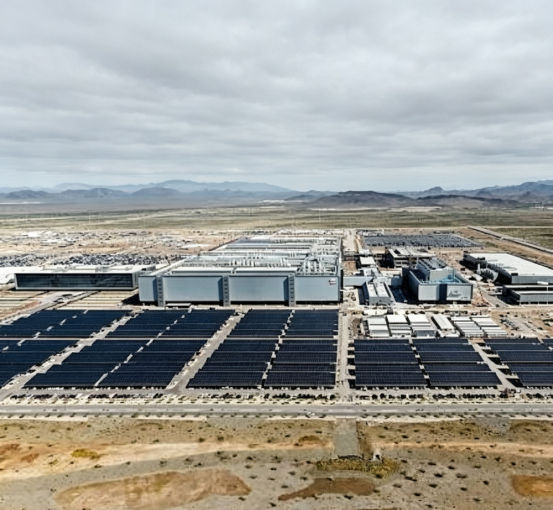
The most symbolic project is TSMC Arizona—a $165 billion investment, with six wafer fabs planned. The first fab began 4nm production in 2024, with yields matching those in Taiwan. According to public financial reports, TSMC Arizona turned from a NT$14.2 billion loss in 2024 to a NT$16.1 billion profit in 2025.
But the TSMC Arizona story is layered, far more complex than just "profit vs. loss":
On the engineering level, yields caught up to Taiwan—proving American workers can make world-class chips.
On the cultural level, in 2025, several former employees sued TSMC, alleging racial epithets, American workers being replaced by foreign nationals, and job postings only in Chinese. Reindustrialization isn't just "building a factory"—it's "building a culture." And culture takes much longer to rebuild than physical plants.
On the strategic level, TSMC Arizona is fundamentally a geopolitical decision, not a commercial one. If you only run the economics, producing chips in the US costs 30–50% more than in Taiwan. But "chips made on American soil" is itself a national security objective—meaning the project's sustainability depends not on profitability, but on how long the US government is willing to keep subsidizing it.
Meanwhile, Detroit is slowly reviving. Tech and healthcare sectors are injecting new energy; abandoned train stations are being converted into office space. But the recovery is uneven—downtown is improving, while many neighborhoods remain impoverished.
Four structural constraints on reindustrialization:
Constraint one: supply chain incompleteness. TSMC Arizona can make 4nm chips, but the chemicals, specialty gases, high-purity materials, and equipment spare parts needed to produce them—most are still imported. A fab's "shell" is in America; its "organs" are in Asia. True self-sufficiency requires rebuilding an entire supply chain—which takes a decade longer than building a single plant.
Constraint two: engineer shortage. The US graduates about 5,000 semiconductor-relevant engineers per year—but TSMC, Intel, and Samsung alone need more than that. More critically, international students account for over 60% of US engineering graduates—and not all of them stay after graduation.
Constraint three: political uncertainty. The CHIPS Act passed with bipartisan support, but subsidy sustainability is never guaranteed. Once administrations change, there is always a risk of subsidy cuts or policy shifts. For a wafer fab that requires over a decade of continuous investment, this uncertainty is itself a cost.
Constraint four: chronic cost disadvantage. Even with subsidies, plants built, and yields achieved, US manufacturing costs remain 30–50% higher than Asia. That means every dollar of CHIPS Act subsidy is filling a "natural cost gap"—not building a self-sustaining industry.
Three Structural Uncertainties
The future of American industry hinges on answers to three questions:
Can the cultural divide be bridged? American high-school students' preference for "manufacturing careers" fell from about 30% in the 1980s to under 10% in 2025. In Germany, about 60% of middle-school graduates choose the dual-system vocational track—its social standing is roughly comparable to the academic path. In America, "going to a factory" is the fallback; in Germany, it's a mutual choice. Rebuilding a manufacturing culture takes a generation.
Will AI eliminate or create jobs? Reindustrialization's political goal is "job creation," but the nature of manufacturing jobs in the AI era is fundamentally changing—from operators to maintenance and programming. Fewer jobs, higher skill requirements. A modern semiconductor fab directly employs far fewer people than a legacy auto plant.

Who will pay the "Made in America" premium? A US-made freezer could cost 2–3 times as much as one from China. If consumers won't pay more, and government subsidies can't last, reindustrialization will only survive in "national security" niches—never reaching broader manufacturing.
Lessons for the Refrigeration Industry: Three Paths
For refrigeration equipment companies, the structural shifts in the US market suggest three entry strategies:
Path one: Local assembly/OEM. The US lacks domestic freezer manufacturing capacity, but brands like True Manufacturing have established channels. Chinese refrigeration firms can cooperate by exporting core components for US assembly, avoiding finished-goods tariffs. Industry estimates suggest total cost is 25–35% lower than directly importing finished units.
Path two: Replacement demand. The US has over 20 million commercial freezers in operation, with an average age exceeding 12 years. Efficiency standard upgrades and the R290 refrigerant transition will keep releasing replacement demand. China's supply-chain cost advantage in compressors and controllers is a natural edge—you don't need to build a finished brand; being the core component supplier is enough.
Path three: Efficiency premium. US energy costs keep rising; end customers are increasingly sensitive to life-cycle energy consumption. A freezer with 15% better efficiency can save $800–1,000 in electricity over its service life—enough to cover a 20–30% upfront price premium. Chinese companies don't need a price war; they need a value war based on energy data.
Conclusion
Detroit's story is not over.
It emerged from the largest US municipal bankruptcy in 2013; by 2025, its population had stabilized at 670,000. It is no longer Motor City, but tech and healthcare are injecting new vitality. It hasn't returned to its peak—and probably never will—but it has found a new way to survive.
American industry is the same. It will never return to its 1950s share of 40% of global manufacturing—the multipolarity of global industry is irreversible. But in specific domains like chips, pharmaceuticals, and aerospace, the US retains irreplaceable advantages.

For the refrigeration industry, the US market's meaning is not "biggest," but "highest"—highest standards, highest premiums, strictest compliance. Whoever survives here can survive anywhere.
And the question facing Chinese refrigeration firms is: when the US market walls itself off with localization requirements and high tariffs, do you climb over the wall (local production) or go around it (shift to other markets)? There is no universal answer—but there is one certainty: you cannot pretend the wall doesn't exist.
The century-long cycle of US industry tells us not how a nation falls, but a simpler truth: hegemons don't last forever, but companies that survive paradigm shifts are those that adjust their posture first. For the refrigeration industry, the next paradigm shift may come sooner than expected.


Comments