European Industry – Refinement and Its Struggles
- Jul 21
- 8 min read
To understand European industry, the best entry points are a concept and a company.
The concept is "hidden champions" —coined by German management scholar Hermann Simon in the 1990s to describe small- and medium-sized enterprises that hold global leadership in niche markets, with annual revenue typically under €5 billion, yet remain little-known to the public. According to Simon's data, of roughly 2,734 hidden champions globally, Germany alone is home to about 1,307—nearly half of the world's total. They are the true backbone of German—and European—exports.
The company is Mayer & Cie. Founded in 1905 in Albstadt, Germany, it was a 120-year-old family business and the world leader in circular knitting machines. At its peak, annual revenue exceeded €100 million, and its products covered 90% of the global high-end knitted fabric market.
In 2025, it filed for bankruptcy.

Mayer & Cie.'s collapse is not an isolated case. German automotive parts suppliers Kiekert, Geraldi, sunroof system maker Webasto, wheel manufacturer BBS—these "hidden champions" have all faced crises in recent years. The pride of "Made in Germany" is undergoing unprecedented strain.
Mayer & Cie. didn't fail because its products were inferior—its circular knitting machines are still world-class. It failed because its customers changed: from "European luxury goods manufacturers" to "Southeast Asian low-cost garment makers." When the market structure shifts, an extreme commitment to quality can become a cost burden. This is a parable: when European manufacturing's customers shift from "premium-paying high-end markets" to "hyper-price-sensitive global markets," the core competence of the European model begins to erode.
Act I: Unique DNA – Why Europe Took a Different Path (1760–1990)
The Industrial Revolution originated in Britain and spread to continental Europe. But Germany—and continental European manufacturing more broadly—chose a path distinct from Britain and America. It didn't choose "mass production"; it chose "high quality, specialization, and export orientation."
This path was shaped by deep historical circumstances. Germany was unified late (1871); its domestic market was too small to support the economies of scale required for mass production. German firms had to be globally oriented from the outset—and in global markets, the only way to compete against British and American mass production was to be better, more refined, more specialized. This survival pressure molded the DNA of German manufacturing: not the biggest, but the deepest.
Two institutional innovations define the German model:
First, dual-system vocational education. About 60% of German middle-school graduates choose the dual-system track—three days a week of hands-on training at a company, two days of theory at a vocational school. This system supplies a steady stream of highly skilled technicians whose social status is roughly comparable to the academic track. In Germany, "going to a factory" is a mutual choice; in America, it's a fallback. This cultural difference has shaped two fundamentally different industrial bases.
Second, the hidden champion's logic of "focus." A company making industrial valves might have annual revenue of only a few hundred million euros—but command over 70% of the global market. They don't chase scale maximization; they chase "making it impossible for competitors to catch up" in their chosen niche. This strategy of "deep rather than broad" stands in sharp contrast to America's "big rather than refined."
By the end of the 19th century, Germany had established global leadership in chemicals, machinery, and electrical engineering. In 1913, Germany accounted for about one-third of global electrical goods production. After WWII, the formation of the European Common Market further amplified Germany's advantages—when all of Europe became a unified market, the "global market" for German SMEs effectively became the "European internal market."

Refrigeration followed the same logic of "focus." Bitzer—the hidden champion of screw compressors, with annual revenue of about €1.5 billion, unknown to the public—but roughly 70% of global supermarket cold chains and about 60% of industrial cooling systems depend on its products. Kelvion—the heat exchanger leader—similarly operates below the public radar. The shared characteristic: not chasing the largest market share, but building insurmountable technical barriers in compressors, heat exchangers, and air coolers.
The creation of "precision manufacturing" let European industry walk a different path from America—it won not by scale, but by depth. But when "depth" encounters a technological paradigm shift, that advantage can turn into a disadvantage overnight.

Act II: Glory and Hidden Fault Lines – The Euro Era (1990–2015)
The birth of the euro in 1999 eliminated exchange-rate risk, supercharging cross-border trade and investment. Germany became an export champion—exports grew 80% between 2003 and 2008. The EU's manufacturing value-added briefly approached America's. This was European industry's zenith.
But beneath the peak, fault lines were already forming.
Fault line one: missing two technological waves. Europe missed the internet and mobile communications. Not a single European company ranks among the world's top 20 internet firms; big-data resources are largely controlled by the US. Germany coined "Industry 4.0" at the 2011 Hannover Messe—yet today that strategy is rarely mentioned.
A frequently overlooked reason: linguistic fragmentation. US internet companies address 300+ million English-speaking users. German companies address only 80 million German speakers, France 60 million, Italy 50 million. Europe's single market exists in law—but not in language. When a German internet company tries to enter the French market, it faces language, culture, and consumer habit barriers—costs far higher than going from New York to California.
Fault line two: the euro crisis exposed Southern Europe's competitiveness gap. Greece, Italy, and Spain's manufacturing competitiveness lagged far behind Germany's. A single currency took away their ability to adjust competitiveness through exchange-rate depreciation. The eurozone's underlying tension is a structural contradiction between "German manufacturing competitiveness" and "Southern European manufacturing weakness" —a single currency turned Germany's export strength into a long-term drag on Southern European industry.
Fault line three: the shackles of industrial inertia. Europe's century-old supply chains and manufacturing systems—once assets—have become enormous burdens for reorientation. Observers describe Europe's plight as "turning a giant elephant"—the bigger the body, the harder the turn. When a supply chain has run efficiently for 50 years, any change faces "who loses their slice" resistance. This is not a management issue—it's a structural one.
Act III: Three Simultaneous Crises (2015–Present)
Crisis one: Energy—the foundation is crumbling
Russia's invasion of Ukraine in 2022 cut off Europe's cheap natural gas supply. This wasn't a temporary price spike—it was a fundamental rewrite of the logic of Europe's industrial energy base.
According to public reports, between 2023 and 2024, over 3,000 European manufacturing firms shifted core production capacity outside the EU—over 60% to China and the US. In 2023 alone, over 200 German manufacturing firms announced overseas expansion plans.
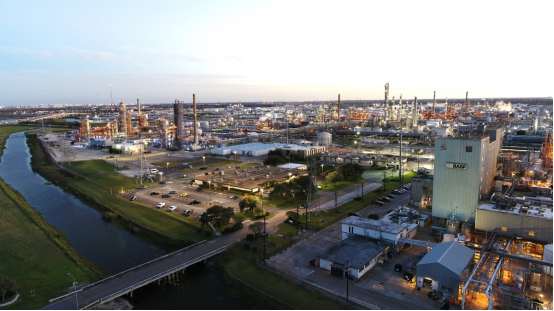
The numbers are staggering: chemical giant BASF invested €10 billion in a US super-plant, completely reshaping its production footprint away from Europe. Volkswagen, BMW, Mercedes—all shifted production lines to the US, China, and Southeast Asia. German auto production has fallen roughly 15% from 2022 levels; chemicals capacity has shrunk over 20%.
The Federation of German Industries (BDI) has called this "the worst structural crisis in history." The EU's employment commissioner warned that the auto, construction, metals, chemicals, and transport sectors could lose up to 1.3 million jobs due to soaring energy costs.
The essence of this crisis: European industrial competitiveness was built on cheap energy. When energy prices permanently move up a notch, the entire competitiveness model must be recalculated. A glass furnace that guzzles natural gas, an energy-intensive aluminum smelter, a power-hungry data center—their operating costs in Europe are no longer "slightly higher" but "unbearable."
Crisis two: Green transition—from moral call to trade barrier
Europe is trying to redefine industrial competitiveness through "green." The 2019 European Green Deal set a 2050 carbon neutrality target.
But the policy's core instrument—the Carbon Border Adjustment Mechanism (CBAM) —is becoming a new trade barrier. Its logic: importers must purchase certificates equivalent to the EU carbon price, making imported products bear the same carbon costs as EU-produced goods.
On January 1, 2026, CBAM officially ended its two-year transition and entered the substantive taxation phase. According to European Commission data published April 7, 2026, the CBAM certificate price for Q1 2026 was €75.36 per ton—approximately RMB 580, several times China's domestic carbon price.
CBAM's structural impact: it "spills over" the EU's internal carbon price pressure to all countries exporting to the EU, through trade policy. This is climate policy, trade policy, and industrial protection all at once—whatever its original intent, its practical effect is to raise the entry barrier for non-EU products.
For refrigeration equipment makers, this means: a commercial freezer exported to Europe, assuming 2 tons of CO₂ equivalent emissions, pays roughly €150 carbon tariff under the €75.36/ton price (about RMB 1,170). If using R290 natural refrigerant, emissions drop below 0.5 tons—carbon tariff of about €38 (roughly RMB 300). Choosing green refrigerants directly translates to profit margin.

Crisis three: Internal divisions
The 27 EU member states do not have aligned interests. Germany emphasizes market-led discipline and fiscal prudence; France favors state intervention and strategic investment. This rift shows up on green transition, industrial policy, and other key issues.
Germany and France's rivalry is not academic. On steel tariffs, France pushed the EU to impose additional tariffs on steel imports, but German critics argued this was pushing Germany toward a subsidy-dependent "French economic model." The German Chancellor even wrote to the European Commission requesting that efficient internal combustion vehicles remain an option after 2035—directly conflicting with the EU's planned combustion-engine ban.
The EU's predicament is not just economic—it's political. When 27 member states each do their own arithmetic, Europe as a whole cannot form a unified, muscular industrial strategy. Yet all the problems Europe faces—energy, digitization, green transition—demand large-scale unified action.
Lessons for the Refrigeration Industry: Three Paths
For refrigeration equipment companies, the changing European landscape suggests three strategies:
Path one: Carbon compliance first. CBAM has landed at €75.36/ton, adjusted quarterly. Refrigeration manufacturers must build carbon-footprint management systems—from raw material sourcing, production, logistics, and usage-stage emissions—all traceable and verifiable. This is not a future issue; it is the current entry ticket to Europe. If a freezer's carbon footprint cannot be quantified, you won't even get to submit a quote.
Path two: Switch the technology track. R290 (propane, GWP=3) and CO₂ (R744, GWP=1) natural refrigerants are accelerating HFC replacement in Europe. Chinese firms' accumulated R290 expertise aligns perfectly with European market demand. Efficiency and environmental standards are upgrading in parallel—green refrigeration solutions already validated in China can be directly deployed for European product development.
Path three: Localized delivery. Europe's energy crisis-driven manufacturing exodus also creates opportunities for supply-chain companies with "in-Europe service" capabilities. Refrigeration equipment is bulky and logistics-heavy; setting up local assembly or after-sales service in Europe can cut logistics costs and delivery times significantly. Whoever builds local service capability in Europe builds a real moat in this market.

Conclusion
Mayer & Cie.'s bankruptcy is not an isolated case—it is a parable.
A 120-year-old family business, global leader in circular knitting, over €100 million in peak revenue—and it collapsed. Not because quality declined, not because management failed, but because its customer base shifted, and it couldn't pivot in time.
European industry is facing the same thing. Its core assets—century-old supply chains, highly skilled workers, hidden champions' focus—were once insurmountable moats. But under the shock of the energy revolution, in the tide of the digital era, under the pressure of geopolitical realignment, these assets are becoming liabilities.
The greater your past success, the harder your transition. This is not Europe's exclusive dilemma, but Europe feels it most acutely because it rests on over a century of accumulated industrial might—the deeper the foundation, the harder the pivot.
For the refrigeration industry, Europe's transformation suggests three certainties:
First, carbon compliance is not a choice—it's a threshold. Companies without a carbon-footprint management system won't enter Europe.
Second, green refrigeration technology is not a cost—it's a competitive edge. R290 capabilities built in China are precisely the passport to Europe.
Third, local service capability is not an option—it's a moat. Whoever builds local supply and service capabilities in Europe will secure long-term advantage.
Europe's predicament reveals a universal law: when a paradigm shift hits, scale isn't a moat, and depth isn't either. The only thing that survives cycles is the willingness to build new capabilities while the old ones still pay the bills.


Comments